
Specifically covering the complex thermal scope regulations 2026- import requirements for Brazil (CII/CR), Kazakhstan (EAEU), Iberian Peninsula (Non-ITAR), and Thailand (EUC)
Table of Contents
Add a header to begin generating the table of contents
Introduction
In 2026, the global thermal imaging market is no longer just about who has the best sensor; it’s about who can navigate the complex web of international trade compliance. As thermal optics are classified as “dual-use” goods, distributors often face customs seizures or month-long delays. At Longot, we pride ourselves on being more than a manufacturer. We are a compliance partner. Leveraging our extensive experience in the world’s most demanding environments, we provide this guide to ensure your inventory moves as fast as our technology.
South America: The Brazilian Fortress (CII & CR)
Brazil is widely considered the most complex market for thermal optics in South America. The Exército Brasileiro (Brazilian Army) maintains strict oversight through the PCE (Produtos Controlados pelo Exército) framework.
- Detailed Regulation: Importers must possess a valid CR (Certificado de Registro). Furthermore, every individual shipment requires a CII (Certificado de Importação) issued prior to export. This is where many brands fail—by not providing the exact technical data the Army requires for filing.
- The Longot Strategy: We provide a pre-prepared “Brazil Compliance Pack,” including high-resolution blueprints and sensitivity certifications. Because Longot devices are engineered for 1000G shock resistance, they perfectly match the high-recoil rifles (.30-06, .308) commonly used for boar hunting in Brazil, making your local Army filing much more straightforward.
For example, importing thermal scopes into Brazil is highly regulated, often requiring special import licenses (LI) through the Siscomex system, with strict enforcement on dual-use technology. Thermal devices are considered export-sensitive, meaning they may require authorized, registered importers and potential, lengthy approval processes (4-6 months) for customs clearance.
Key Aspects of Importing Thermal Scopes to Brazil
- Import Licenses & Authorization: Only authorized companies registered with the Foreign Trade Secretariat (SECEX) and the Ministry of Industrial Development and Commerce (MDIC) can typically import these items, requiring a RADAR licence.

- Dual-Use & Restrictions: Thermal riflescopes are classified as dual-use, making them subject to rigorous export controls from the origin country (e.g., U.S. Department of State or Commerce) and import restrictions in Brazil.
- Documentation: Detailed documentation, including precise specifications (range, frame rate, resolution), must be provided for the Import Declaration (DI).

- Personal Use/Travel: While some users report success bringing thermal devices as personal equipment, they should be declared upon entry via the E-DBV (Electronic Declaration of Baggage) to avoid seizure.
- Technical Specifications: Devices with higher effective frame rates (e.g., 30 or 60 Hz) are more heavily restricted compared to lower frame rates (under 9 Hz).
It is highly advised to work with a local Brazilian customs broker to ensure compliance with the specific, often changing, regulations for sensitive optical equipment.
Central Asia: Kazakhstan & The EAEU Standards
Kazakhstan is the crown jewel of Central Asian hunting. As a member of the EAEU (Eurasian Economic Union), it follows the EAC certification standards.
- Market Context: In this region, a brand’s reputation in Russia is its strongest currency. Longot’s established fame in Russian professional circles provides an immediate trust-pass for Kazakh dealers.
- Environmental Compliance: Regulations here are as much about nature as they are about law. With temperatures dropping to -40°C, optics must be mechanically resilient. Longot’s Auto-Calibration technology is specifically designed for the steppe and high-altitude mountains, preventing the “zero-shift” that plagues competitors during extreme temperature swings.
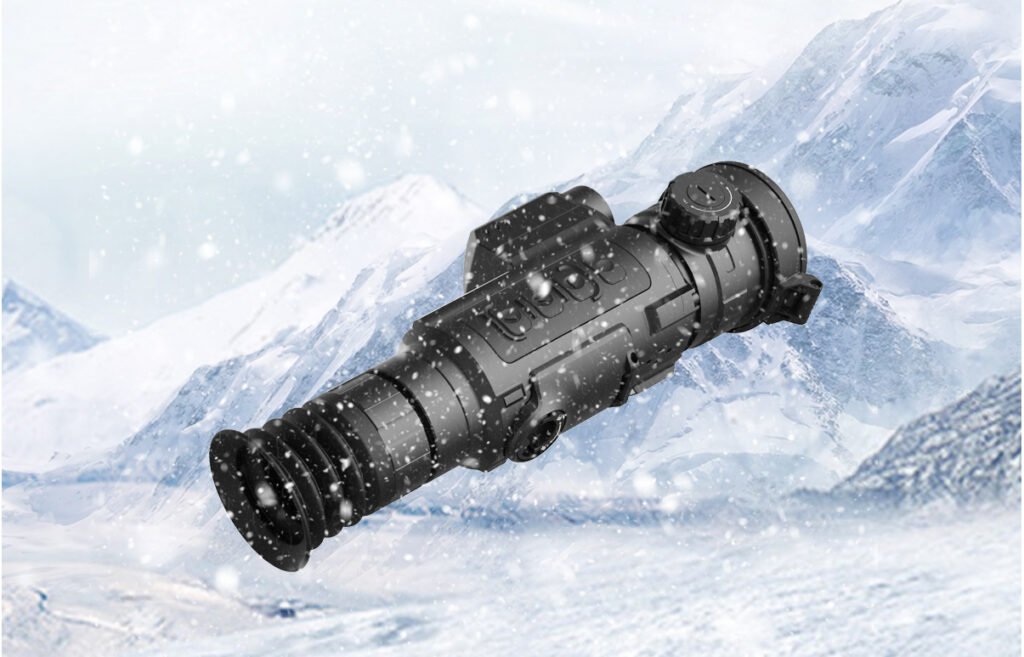
The importing policy of thermal scope to Kazakhstan is as follows:
Importing thermal scopes into Kazakhstan requires strict compliance with dual-use, sanitary, and technical regulations, often necessitating licensed customs brokers and potential import licenses. These items are subject to scrutiny due to their classification as high-tech electronics, with documentation needing to be in Kazakh or Russian.
Key Importing Requirements
Documentation: A full declaration of goods must be filed within 30 days, with a brief declaration within 24 hours of arrival.
Customs Broker: Foreign entities are required to use licensed customs brokers.
Translation: All shipping documents must be translated into Russian or Kazakh.
Dual-Use Classification: Thermal scopes, particularly high-performance ones (e.g., ≥6× magnification, integrated rangefinding), may be classified as dual-use, requiring special import/export authorization.
Registration: Certain electronic or specialized equipment may require prior confirmation of state registration (5-7 weeks) and validation by local authorities.
Restrictions and Considerations
Sanctions and Monitoring: Due to the risk of re-export to Russia, high-end, Western-manufactured optics face stricter scrutiny and monitoring.
Personal Use: While some personal goods are duty-free, importing specialized, high-tech, or dual-use items may exceed these allowances.
Documentation Accuracy: Manufacturer information on packaging must exactly match the Certificate of Conformity (CoC), invoice, packing list, and technical descriptions.
For specific import, it is crucial to consult a local customs broker or the State Revenue Committee of the Republic of Kazakhstan.
Europe: The Non-ITAR Fast Track (Iberia)
For distributors in Spain and Portugal, the primary bottleneck is often the U.S. State Department’s ITAR restrictions, which can delay shipments for months.
- The Regulatory Edge: Longot is a Non-ITAR brand. Under EU Dual-Use Goods regulations, importing our devices is significantly more efficient. We bypass the restrictive U.S. licensing, allowing European dealers to maintain leaner, more responsive inventories.
- Technical Fit: The humidity of the Iberian forests and the mist of the Atlantic coast require superior sensitivity. While others offer 40mk sensors, Longot’s NETD < 20mk cores provide the contrast needed to identify targets through thick fog, giving your customers a professional-grade advantage that “lifestyle” brands simply cannot match.
The importing policy of thermal scope to Portugal is as follows:
Thermal scopes are strictly regulated in Portugal as dual-use, export-sensitive items, often requiring special import licenses and documentation. As part of the EU, importing these devices from outside the EU requires compliance with strict, often US-based ITAR or EAR regulations, including end-user statements. Expect to pay 23% VAT on electronics.
Key Aspects of Importing Thermal Scopes to Portugal:
Dual-Use Classification: Thermal scopes are treated as dual-use goods, meaning they can have both civil and military applications.
Documentation Required: An End User Statement (EUS) is typically required to prove that the device will not be resold or used for military purposes.
Import/Export Licenses: If the scope is being shipped from outside the European Union (e.g., from the US or Canada), you will likely need an export permit from the country of origin, along with potential import authorization in Portugal.
Customs and Taxes: Goods entering Portugal are subject to customs supervision. Thermal imaging equipment generally attracts a 23% VAT rate.
Restrictions on Use: While importing might be possible with proper documentation, using thermal scopes for hunting or other purposes may be restricted or illegal in certain areas or for specific activities in Portugal.
It is highly recommended to check with the Portuguese customs service or a specialized customs broker to ensure compliance with local regulations.
The importing policy of thermal scope to Spain is as follows:
Importing thermal scopes into Spain is generally legal for civilians with proper authorization, as they are considered optical aids rather than weapons. However, they are often classified as dual-use goods under EU Regulation 2021/821, requiring strict documentation, particularly for high-performance units (e.g., >9 Hz frame rate). Shipments, especially from outside the EU, must comply with RoHS and RAEE (electronic waste) regulations, requiring registration in the Integrated Industrial Registry (RII) and potential import licenses.
Key Aspects of Importing Thermal Scopes to Spain:
Documentation: Importers must provide a commercial invoice (C.I.F.), and if required, an import license from the Spanish Secretariat of Commerce.
Regulatory Compliance (RoHS/RAEE): Devices must comply with EU safety standards. Shipments under 5 units with a value under €1000 (B2C) or €150 (B2B) may have eased controls, but generally, registration in the RII is required.
Dual-Use Status: Thermal imagers with a 50 Hz frame rate are considered dual-use, necessitating stricter export/import controls compared to lower-spec devices.
U.S. Exports (ITAR): If importing from the U.S., items are subject to ITAR/EAR regulations, requiring export licenses and an End User Statement (EUS).
Regional Rules: While ownership is generally legal, the use of thermal scopes for hunting varies by autonomous community, with specific allowances for nocturnal wild boar control.
It is recommended to use specialized customs agents for clearance to manage electronic waste (RAEE) and dual-use documentation to avoid seizure.
Southeast Asia: Humidity & The EUC (Thailand & Vietnam)
Southeast Asia is a high-growth region driven by both agricultural protection and border security needs.
- The Paperwork: Countries like Thailand and Vietnam require a clear End-User Certificate (EUC). Customs officers focus heavily on the “Non-Military” classification of the gear.
- The Longot Strategy: We assist our partners by providing standardized “Agricultural & Outdoor Observation” declarations that align with HS Code 9013100010
- Durability: In 100% humidity tropical environments, internal lens fogging is a common cause for returns. Longot’s IP67 nitrogen-purged housing ensures that moisture never enters the unit, protecting your profit margins from the “silent killer” of tropical optics: internal corrosion.
Importing thermal scopes into Thailand, classified as dual-use, export-sensitive items, often requires specific permits, though some users report success bringing them as personal items. It is strongly advised to verify with Thai Customs, as these items are controlled and may require import licenses or trigger inspections.
Key Considerations for Importing Thermal Scopes to Thailand:
- Regulations & Permits: Thermal scopes are generally considered dual-use (civilian and military) and can be subject to strict export controls from the country of origin (e.g., under the Canadian Controlled Goods Program).
- Customs Declarations: When traveling with a thermal scope as a personal item, it is recommended to declare it at Thai customs to avoid issues.
- ATA Carnet: For temporary importation of professional equipment (like for filmmaking), an ATA Carnet serves as a “passport” for equipment, listing serial numbers to ensure it is re-exported.
- Device Specifications: Thermal cameras with frame rates higher than 9 frames per second (fps) are more heavily restricted than those below 9 fps.
- Import Duties: Thailand may impose customs duties on imported items, including a 10% duty on low-cost imports.
For the most up-to-date information, it is recommended to contact the Customs Department of Thailand directly, as policies can change.
Middle East: High-End Desert Resilience (KSA & UAE)
The Middle East—particularly Saudi Arabia and the UAE—represents the pinnacle of high-end hunting and security demand.
- Security Oversight: Importing requires clearance from the Ministry of Interior (MOI). Middle Eastern clients demand “Battle-Proven” equipment; they value real-world endurance over laboratory specs.
- Heat & Sand: The 50°C+ desert heat causes massive thermal noise in lower-quality sensors. Longot’s proprietary heat-dissipation architecture ensures the image remains crisp even in the midday sun. Our reputation from the rugged terrains of Afghanistan proves to Middle Eastern buyers that Longot can survive the sand, the heat, and the heavy use that define this elite market.
Thermal Imaging Scope Import and Resale Policies (Dubai vs. Afghanistan)
I. Dubai (UAE) Import Policy: Commercial Compliance Path
In Dubai, importing thermal imaging equipment involves not only customs procedures but also security clearance processes.
Qualification Requirements: Importers must hold a SIRA license that includes “security equipment trading” in its business scope.

Prior Approval (NOC): Before each shipment arrives, a shipment NOC must be applied for and obtained through the SIRA portal.
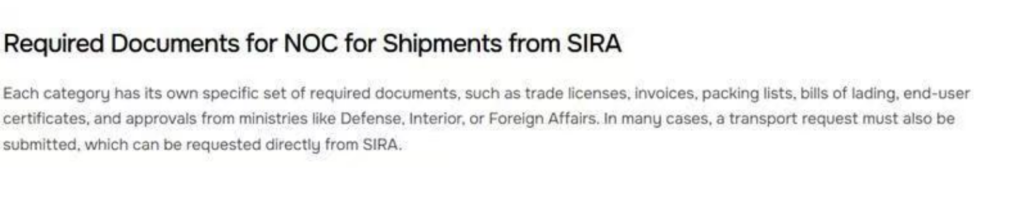
Key Content of the End-User Certificate (EUC):
Signing Party: Must be signed by a licensed company in Dubai.
Usage Restrictions: The declared use must be for “civilian security, law enforcement supply, or authorized resale within the UAE.”
Re-export Restrictions: Must include a “Non-Transfer Clause,” committing that the equipment will not be moved outside the UAE without permission from the country of origin’s government.
Technical Specifications: Refresh rate (Hz) and resolution must be specified in detail.
Customs Documents: MOIAT (ECAS) certification, MOI/MOD restricted items import permit, commercial invoice, and packing list with serial numbers must be submitted.
II. Afghanistan Import Policy: Extreme Control Path
Shipping thermal imaging equipment to Afghanistan in 2026 is a highly sensitive business, subject to close monitoring by the international community.
Embargo Risk: The vast majority of equipment containing US or European technology (ITAR/EAR controlled) is strictly prohibited from entering Afghanistan.
Extreme Importance of the EUC:
Background Check: The exporting country’s government (e.g., China or the EU) will conduct a thorough background check on the end-user in Afghanistan.
Physical Verification: The EUC must state that the equipment is strictly prohibited from being delivered to sanctioned entities, and usually requires providing on-site photos or GPS coordinates of the final delivery location.
Government Certification: In some cases, the EUC may require stamping by relevant departments of the current de facto regime in Afghanistan, but this increases the risk of the export license being rejected by the country of origin.
Why Partner with Longot & AirSeeker Optics?
International trade in 2026 is about risk management. Every day your product sits in customs, your ROI drops.
- Zero After-sales Record: In countries with high import tariffs, shipping a unit back for repair is a financial disaster. Our nearly zero-failure rate is your biggest cost-saver.
- Total Documentation Support: We don’t just ship boxes; we ship solutions, including all the technical certifications your customs broker needs.
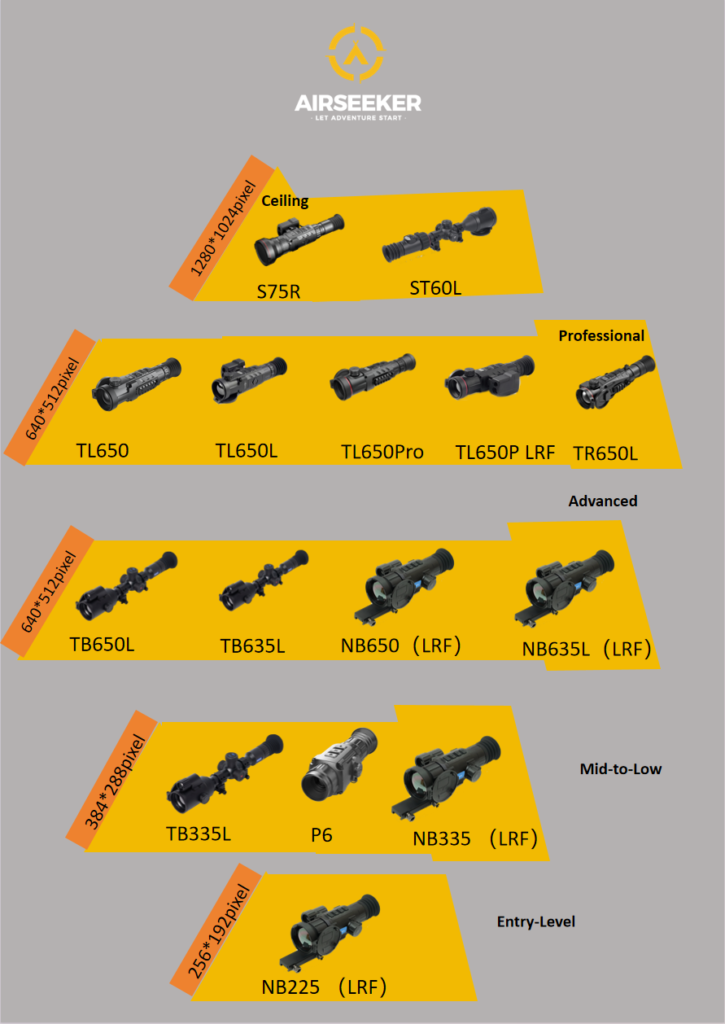
Ready to secure your 2026 inventory?
Leave your email, tell us the thermal optics you’re interested in
AirSeeker Outdoor Facebook Group
Get the Latest Offering : Discounts, Gifts, Outdoor Activity News.
Get in Touch With Us !
Reply Within 24 Hours